The Fogo ecosystem is developing: Which DeFi, NFT, GameFi projects are building?
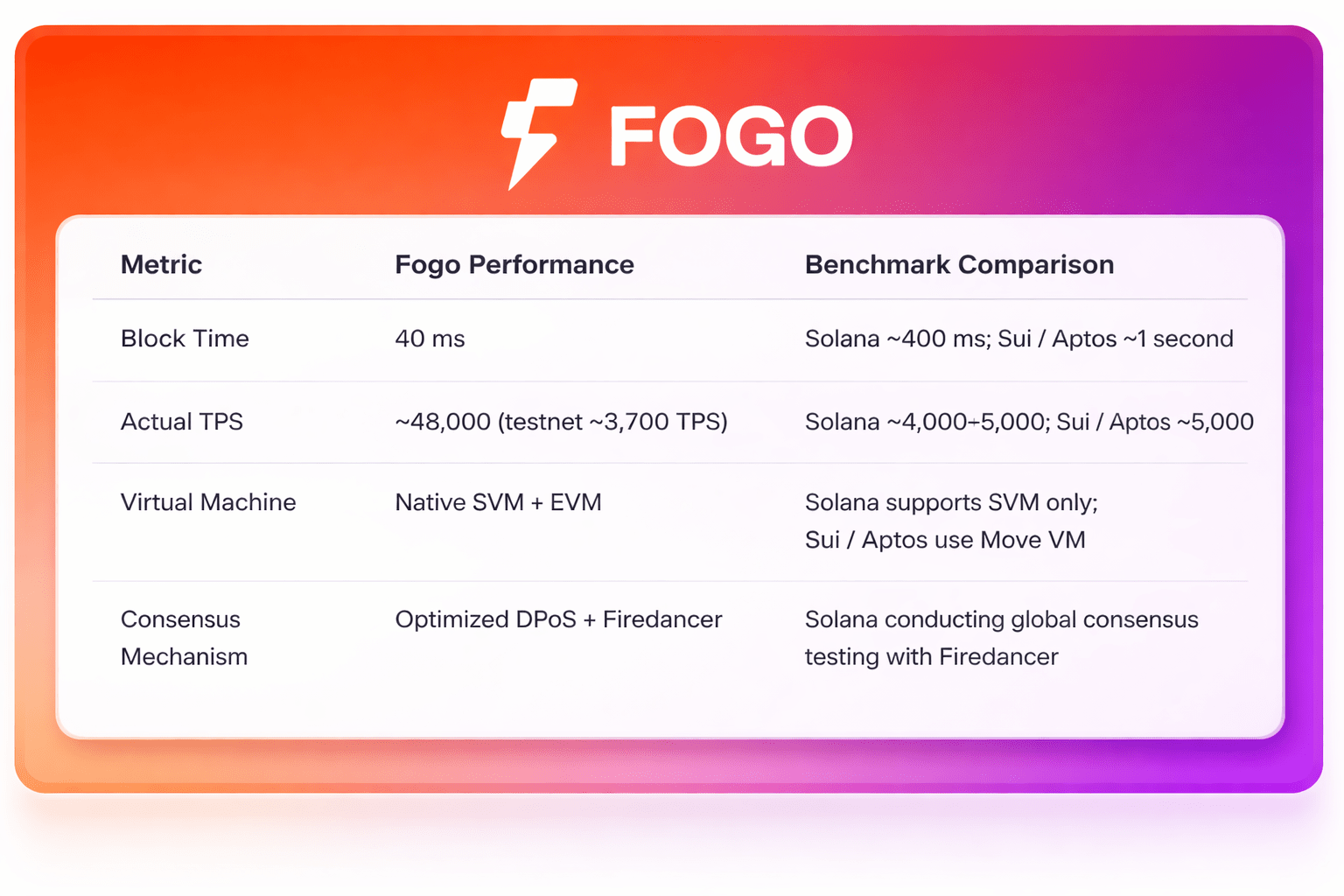
One thing I see quite clearly when looking at @Fogo Official is that its ecosystem is in the "deliberate formation" stage, meaning it hasn't exploded in the number of projects like mature chains but has started to show pieces that align with the initial thesis of the chain, which is financial execution and trading infrastructure. The important question is not how many projects there are, but which projects have the potential to create real order flow and liquidity.
In the DeFi layer, the earliest projects on Fogo revolve almost entirely around trading-native use cases, particularly perp DEX, orderbook DEX, and tools serving market makers.
This makes sense because with a chain that has low latency and short block times, the clearest competitive advantage lies in execution for transactions.
I have seen a few teams building perp engines on SVM port logic quite quickly from Solana, leveraging the familiar account model and parallel execution.
These projects often focus on optimizing the matching engine, fast liquidation mechanisms, and accurate funding rate updates, as these are the points where low latency truly makes a difference.
Additionally, there are projects providing liquidity layers, vaults for market makers, or services like order routing and position management, acting as 'middleware' between traders and exchanges.
In addition to direct trading, another DeFi layer that is starting to take shape is lending and collateral management primarily serving trading activities.
Instead of trying to build a comprehensive lending market from the start, some teams choose to build pools for lending assets serving margin or cross-margin for perp DEX.
This creates a closed-loop capital cycle on $FOGO , where stablecoin and collateral assets are cycled between trading and lending, thereby increasing capital efficiency.
I spoke with a team experimenting with this model, and they emphasized that Fogo's advantage is not the highest APY but the ability to update account status almost in real-time, helping to reduce liquidation risk and improve the margin trading experience.
In the NFT layer, the current Fogo ecosystem is not as vibrant in terms of art or PFP as other chains, but functional NFT applications are starting to emerge rather than just collectibles.
Some projects use NFTs as positions representing LP or positions in trading vaults, similar to how some protocols on Solana and Ethereum have done.
This aligns with the direction of 'financial execution' because NFTs are used as primitives to manage ownership rights and financial status rather than just for collecting.
Additionally, there are initial experiments with NFTs linked to on-chain identity or reputation for traders and market makers, although this area is still very early and lacks standout products.
With GameFi, Fogo is not yet a primary destination for game studios like other chains that have built narrative gaming before, but there are still some small teams experimenting with games that have strong financial elements, such as trading games or market simulation games where low latency and fast state updates are advantages.
These projects have not yet created a large user base, but they serve as a sandbox to test the network's ability to handle fast and numerous transactions in a continuously interacting environment.
From a builder's perspective, if GameFi develops on Fogo, it will lean towards games connected to trading and finance rather than casual games.
Another layer of projects that is less mentioned but important is the infrastructure and tooling for developers.
Since Fogo is compatible with SVM, many tools from Solana can be reused or adjusted, but still, components like indexers, data pipelines, monitoring, and SDKs optimized for low latency are needed.
I have seen a few teams building indexers specifically for order flow and trade data on Fogo, as high-frequency trading data requires a different handling approach compared to traditional DeFi.
Additionally, there are oracle projects providing price feeds with higher update frequencies, as with perp DEX and orderbook, oracle latency directly impacts risk and fairness.
Notably, many projects in the current Fogo ecosystem are not trying to 'fork' successful products from other chains, but rather adjust designs to take advantage of latency and execution speed.
For instance, instead of pure AMM, they lean towards a hybrid model between AMM and orderbook, or batch auction mechanisms to reduce MEV and improve price discovery.
This is a good sign because it shows that developers are trying to leverage the technical advantages of the chain rather than just copying old models.
However, looking at the overall picture, the Fogo ecosystem is still in a very early stage and lacks some important pieces.
Stablecoin liquidity is not yet deep, the number of large market makers participating is limited, and cross-chain bridges to move assets into Fogo still need to be expanded.
I have seen a few teams complaining that bootstrapping liquidity on Fogo is still harder compared to chains that have network effects, as they have to build products while also managing incentives to attract initial users.
Another factor is the dependence on incentives in the early stages.
Many projects on Fogo still need reward programs to attract users and liquidity, which is normal for a new chain but raises questions about sustainability.
As incentives decrease, only those projects with true product-market fit that generate sufficient fees will retain users.
This is the stage that I think will clearly differentiate within the ecosystem.
From a long-term perspective, I think the Fogo ecosystem will not develop broadly immediately like an 'everything chain', but rather in depth along some key axes, especially trading, derivatives, and related financial services.
When these axes are strong enough and generate stable cash flow, other pieces like functional NFTs, identity, payments, and even some finance-linked game applications will develop around them.
My observation is that Fogo is following a fairly clear direction: building a strong core around financial execution and then allowing other use cases to attach to that core.
If they succeed in creating a strong DeFi trading project cluster to attract liquidity and order flow, the rest of the ecosystem will have a foundation for development.
On the contrary, if this core lacks sufficient force, individual NFT or GameFi pieces will struggle to attract users to the chain on their own.
@Fogo Official #Fogo $FOGO
Source: https://www.binance.com/en/square/post/292958886804593