Animoca’s Yat Siu on why AI agents will drive mass market web3 adoption
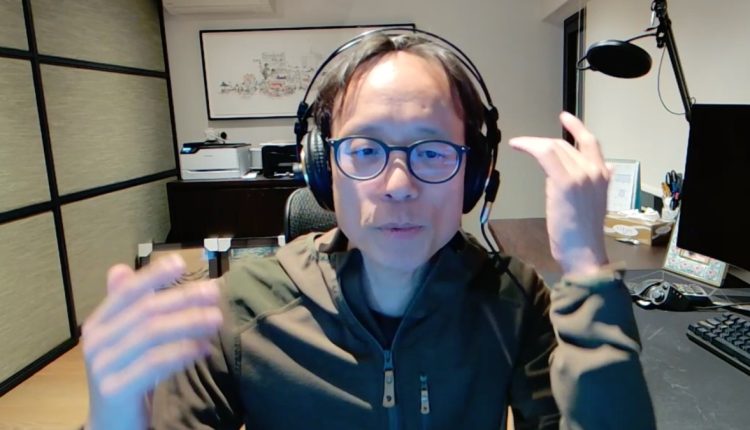
In the latest episode of the Blockchain Gaming World podcast, editor-in-chief Jon Jordan talks to Animoca Brands’ executive chairman Yat Siu about the rise of AI agents, the launch of Animoca Minds, and why he remains bullish about blockchain gaming.
BlockchainGamer.biz: So how are you using Animoca Minds?
Yat Siu: Right now, I have nine AI agents in Animoca Minds working on different things. I first started with family travel scheduling. I have three kids, my wife and everything, so trying to figure out different time zones. My oldest son is starting to use it for his school schedules, as well as reminding and homework and that kind of stuff.
I’m also using one for investor management, investor lists and tabling. Obviously, we use software to run a database of our investors, but then there’s reminders, people we met, contacts and everything, that’s really useful.
But the wild thing is the adaptations. Because of the way that AI is developed, it can start building tools and skills for you. In my assistant channel, when my flight was delayed from Tokyo, the AI was only looking FlightAware and it wasn’t able to tell that the flight was delayed. So I helped it to build a skill by saying, ‘Hey, look at these five different sites, triangulate, get the data, here’s the API calls’. I didn’t have to do any coding. It put it all together and created this new flight tracking skill. Then voila, in a number of minutes, it had the ability to track when I arrived. It would send a message to my wife when I landed. It would make sure I got picked up.
That was really interesting to see because right now, the issue with AI is only a really small percentage of people are vibe-coding. The vast majority are using AI really as an extension of search, like it’s just a better Google. We haven’t really changed behavior. We say it’s talking, but we’re really searching for something. And then we’re getting an input. And that input is distilled and explained better. But that’s about it, right?
What we’re seeing with true agentic AI, which is the reason Animoca Minds was built with the perspective of distributing through email and Telegram right now, (and eventually WhatsApp and Messenger), is that it comes to you in the interface that you’re most familiar with from a human chat perspective. That’s the interface we think will be both disruptive and more powerful. Because the real value is not me talking to the AI but the AI talking to many people in a group. So from a work perspective, you can collaborate. They can give you input, there’s information.
One of the minds that I built was Game Master. It just makes text-based games, like quizzes, country quizzes, where you’ve been, that kind of stuff. It was able to contextualize and essentially build some very interesting games. Then, when you put everyone into a Telegram chat together, it becomes your game master. This seems like a pretty simple thing to do, but you can start inventing some fun, new mini-game creations.
Then I have another one, which is basically vibe-coding stuff for me on the side. Right now, it’s not attached to any development tools, but I’m able to do API interfaces and plug into stuff. Super powerful.
Even my mom potentially could build skills using it, and that’s what I think will happen with agentic AI. I don’t believe we’re all going to be using OpenClaw. OpenClaw is amazingly powerful, but it’s a bit like setting up Apache web servers back in the mid-90s, right? We install it, we put the boxes together, we put our line in, all sorts of security issues, by the way. All that data was in text files. You’re running super vulnerable Perl scripts. Later on, we put those servers into Rackspace. Then eventually, we get to Amazon Web Services. It does everything for you. You just click a button, and you’re ready to roll.
OpenClaw is only for the small technical percentage. What we’re trying to do with Animoca Minds is for the 99 percentile of the world that is not going to do what the tech guys are doing, but still wants to get the benefits. You know, speaking over WhatsApp and Telegram and Messenger because the LLM tools themselves are not the innovation per se. The LLM tools are what everyone else is using.
What makes OpenClaw so extra powerful is LLMs have hit a limit because they have pretty much indexed the world. The written word that is public is known to all. However, OpenClaw opened up LLM indexing to a whole new universe of data that it didn’t have before. A treasure trove of personal data that it had never had access to. All of your emails and all your messages and all of the other scary stuff that might emerge from that. That’s the wonder we’re seeing.
Of course, most people don’t want someone to dig through all their emails and ask what happened to your divorce or your relationship there, and what about these photos over here? These are not the things you necessarily want to share, but what you want to do with an assistant is they want to be able to support you, so calendar scheduling, flight booking and workflows. Workflows in a way that’s not intrusive.
Think about how many companies have an issue installing OpenClaw into their own intranet. It would be impossible. But plugging it over an email interface as an assistant? Much, much easier. So that was the thinking around Animoca Minds.
Ethoswarn has been working on this since 2025, right?
The team at Ethoswarm was working on this for a while, It’s an Animoca portfolio company. Really, it’s the CryptoSlam team, which was known for NFT indexing back in the day. They still do that. They actually made money using their AI agents to trade NFTs. That’s how they got by. But they said, ‘This AI can actually do a lot more. Let’s build on this’. Then, when OpenClaw came out, it forced an acceleration. So we essentially launched it very quickly. The product was already sort of in development, but we had to accelerate it. And here we are.
Agents could also solve a lot of crypto UX issues too.
What’s going to happen in future is that people are going to build extensions, build bots that can be plugged into your AI. Someone has already built a skills bazaar. You can browse the skills and agents that are public for you to utilize. This is the beautiful thing about open composability and blockchain, because now all this stuff is out there, and you can build on it.
There’s something else that excited me. We talk about decentralization, and we talk about opening up the web and making it user-owned. That’s still the vision. Digital property rights are still such a big deal for all of us if you want to make it a freer web. But even with web3, we haven’t made it big enough yet. The onchain economy is maybe 50 or 60 million users. It hasn’t really grown significantly. Part of the reason is the distribution rails are still locked. Apple still has restrictions. If you have NFTs, for instance, it’s not completely free. Google is also not completely open. Steam has technically banned it, right? So the ability to really distribute via those distribution vectors is still limited and restricted.
However, I think the entire distribution game is going to be completely altered with AI agents. When you look at how we’re searching, how we’re using AI, we’re using it like Google+, so nothing has changed. We just changed the interface. But we can already see what’s happening to the websites. When you’re searching on Google, Gemini gives you the summary. People no longer go to the actual website. They just stay on Google. So great for Google, bad for websites. And people are already seeing the drops in the traffic around that, right?
But you can see where it’s going to go. If you have an AI agent, they’re going to go and get all the information for you and push it to you. What we’re seeing now with Animoca Minds is they’re coming back with valuable insights, where I’m more like reacting to it as opposed to asking for it. That’s the magic people saw with OpenClaw. It just did all sorts of stuff, providing insights and information and then you react to it, almost like an editor does with a piece of writing, rather than initiating the conversation. In that scenario, the distribution game changes; it’s as transformative as when the smartphone came out. That distribution vector threatened the entire classical distribution space.
I think the web as we know it will disappear. There’ll be websites, but we’ll no longer go to websites. Everything will be drawn from MCP servers. The New York Times is not going to be read on a website. It’s going to be delivered through an AI agent who then might link to the New York Times. And there’s going to be incentives and payments that happen on the back. All of that’s going to run on the token economy.
And because the AI agent represents your interest, you become the nexus of that distribution, hopefully. The power rests back into the user, and web3 and blockchain runs in the back to ensure that it stays decentralized with the value construct for the exchange of value, which I think will happen more naturally because of the sovereign nature of blockchain.
That’s how I think we might get to user adoption, because everyone’s using AI agents where information comes to you. To be clear, the wallet part is not the most important part. I know a lot of people in crypto say it’s a wallet for trading, but my mom is not going to be signing up for an AI agent so she can trade crypto. She’s going to be using an AI agent to have fun or to do interesting things or to make it useful for her life. The fact it has a wallet is just a feature that allows AI to be useful.
They basically remove all the friction.
Yes, agents essentially become the interoperability layer. If I want to sell this asset or I want to play this game and I need to get an asset, the agent doesn’t care whether it’s on this or that chain. It just gets it somehow, then you can use it. The agent deals with that.
This is also one area where we can solve that friction point. If I want to buy an NFT and my agent does it for me, I don’t care which marketplace it sits in. I don’t care whether you bridged it five different ways. I just care that I have it and that I can play this game. Essentially, it’s like making a request — I want to play this game. To play this game, I need an NFT. Let’s go. It gets you the NFT. You don’t have to know which marketplace it’s on. You just play the game because your agent puts it in your wallet. I think those friction points will be solved.
There’s been a debate amongst some people in crypto where they’re saying, ‘Gaming was a misadventure [for blockchain]. It’s a good thing that we can just focus on the real stuff. Finance is what blockchain is all about’. I’ve stated my disagreement, and many others have as well?
Because if you frame it in this way, then only the people who care about finance are going to be in blockchain. It limits the scope. If the bigger vision is around this new internet in which we could have a stake and particularly in the age of AI, it’s so important that the rails it uses — the infrastructure and the payments and the ownership — belong to you.
The platform is much more than just a payment system and a financial system. It’s one where ownership has to be a core element. Then the financial elements become possible because you own it. If you don’t own anything, the financial systems will always take advantage of you. You need to have agency over that. That’s super critical.
What’s the reaction been for Animoca Minds?
It’s in the thousands of users at the moment, thousands of minds. However, it’s growing in usage. The issue is more around the fact that people are signing up for a mind, and then it just sits there. They don’t know what to do. What is astounding, though, is the early numbers. Again, these are small numbers but the ARPU is fairly high. It’s about $14. That doesn’t seem crazy, but if you start using it very actively, your mental model starts to shift. You say, ‘For this type of thing, I’m willing to pay several dollars a day’. For an assistant, the idea I’m spending 30 or 40 dollars a month isn’t crazy.
But if you want trading information, you can’t have a daily update because Bitcoin would have moved 50 different ways. So there’s a whole bunch of areas that will cost you more. But for decisions like this, it’s worth it. You’re going to spend $50 a month to have someone update you in real-time as opposed to having to monitor everything yourself, for instance.
The whole idea of value is much more clearly understood when agents do stuff that would be tedious for you. The things you’re willing to say, ‘Hey, I’m going to spend a couple of dollars a day to just manage that for me’. And once your AI agents have your persistent memory, that’s a much deeper moat because you’ve invested your time, your family AI agent knows everyone’s birthdays, knows where they go to school, does all the details, sends reminders about stuff that I need to know about, has an idea of the routine. That’s quite powerful, quite valuable.
In this changing environment, how does Animoca think about games?
We remain bullish on gaming. I wanted to draw some parallels. One of the reasons why a lot of people seem critical about blockchain gaming is because games don’t have the billion-dollar valuations they used to have. But when you look at the valuation of JP Morgan, which is like $800 billion, and you look at EA, one of the biggest game companies in the world, it sold for $60 billion. That’s a big number, but nobody’s going out and saying EA is not a real business just because it happens to be 15 times smaller than its equivalent reputational bank, right? What I’m saying is that the world of finance has always been larger in valuation than the world of games.
In the early days of gaming, when you were a $20 to 50 million dollar company, you were respectable. You weren’t some joke. You were making revenues and profits. Being a billion-dollar game company was a really big deal. So I tell people, this is about the entry point. If you come in at a $5 or 10 million valuation, that was our entry point in The Sandbox, a $4.5 million valuation. Our entry point in Axie Infinity was $8 million, which was fair for those companies at the time. They happened to have really explosive growth, but being worth hundreds of millions of dollars today is not bad. I think people being critical and saying, ‘It’s not worked because it’s not worth billions’ is the wrong point. There will be games that are worth billions because they will onboard tens of millions of users. That’s one point.
The second one is when we talk about GameFi, the perspective we’ve learned is it’s not just about bringing finance into games, it’s about gamifying finance. I would argue that Polymarket is actually GameFi. If you’re trading on PolyMarket, you’re experiencing an entertainment experience that is gamified.
That’s the culture of Gen Alpha. In other words, products such as Robinhood and eToro that do social trading and leaderboards, are going to be more gamified, are going to be more successful with the younger generation. These are all gamification methods. Gaming has been a test bed and has advanced this. There’s a lot to be learned, so I think we should look at what other gamification methods you can take into other applications of finance, which makes them more inclusive and broader.
Finally, I want to talk about Anichess and the CHECK token. It’s not a billion-dollar token. It’s around $60 million FDV, but for a chess game, that’s pretty good.
What I find interesting is it’s held up fairly well, comparatively speaking, because it wasn’t the craziest highest valuation, but it has reasonable liquidity for the size of the token. It’s got people like Chess.com and Magnus Carlsen behind it. That’s what we should be looking for, for most games. If your entry point is $10, $20 million, that’s good. Have fun with the game. Grow from that. I think there’s going to be many, many more games in this area. We hope Anichess could be more valuable, but that it should already be celebrated as a success because most indie game studios in the world will say, ‘I want that’.
The token model will work. Just don’t be greedy about it. I think we fell, many of us fell into this trap that it should be worth a billion. That’s a mistake, right? Just be happy with what you have and make it sustainable. Get the right level that brings everyone in. Because if your game starts at 10 or 20 [million], when it’s 30-40 [million], it’s long-term sustainable without creating that same volatility around something that pumped really high and dropped really fast. That’s how you destroy your fan base.